

Small business employee insurance is a coordinated set of policies, chiefly workers' compensation (legally required in almost every state once you hire), general liability, and ecommerce-specific coverages like product liability and cyber insurance, that protect employees and the business from workplace injuries, legal claims, and unexpected losses, with premiums driven by payroll, industry risk, and headcount. Most important: buy mandatory workers' compensation as soon as you hire (state thresholds vary) and add relevant liability/cyber coverage for ecommerce, because a single claim can cost thousands or shut you down, yet basic policies can run as little as about $11/month (averages are higher).
- What Is Small Business Insurance for Employees? Why...
- How Employee Insurance Coverage Works: Policy Types, Triggers,...
- Key Benefits of Employee Insurance: Real-World Protection for...
- Common Misconceptions About Employee Insurance: Myths That Put...
- Protecting Your Team and Business: The Essentials of...
What Is Small Business Insurance for Employees? Why It Matters for Growing Teams
Small business insurance for employees is a group of policies designed to protect both your team and your business from workplace injuries, legal disputes, and unexpected losses. As soon as you hire staff - even part-time or seasonal workers - state law almost always requires you to carry workers' compensation insurance. For ecommerce sellers, additional risks like product liability and cyber threats make specialized coverage essential.
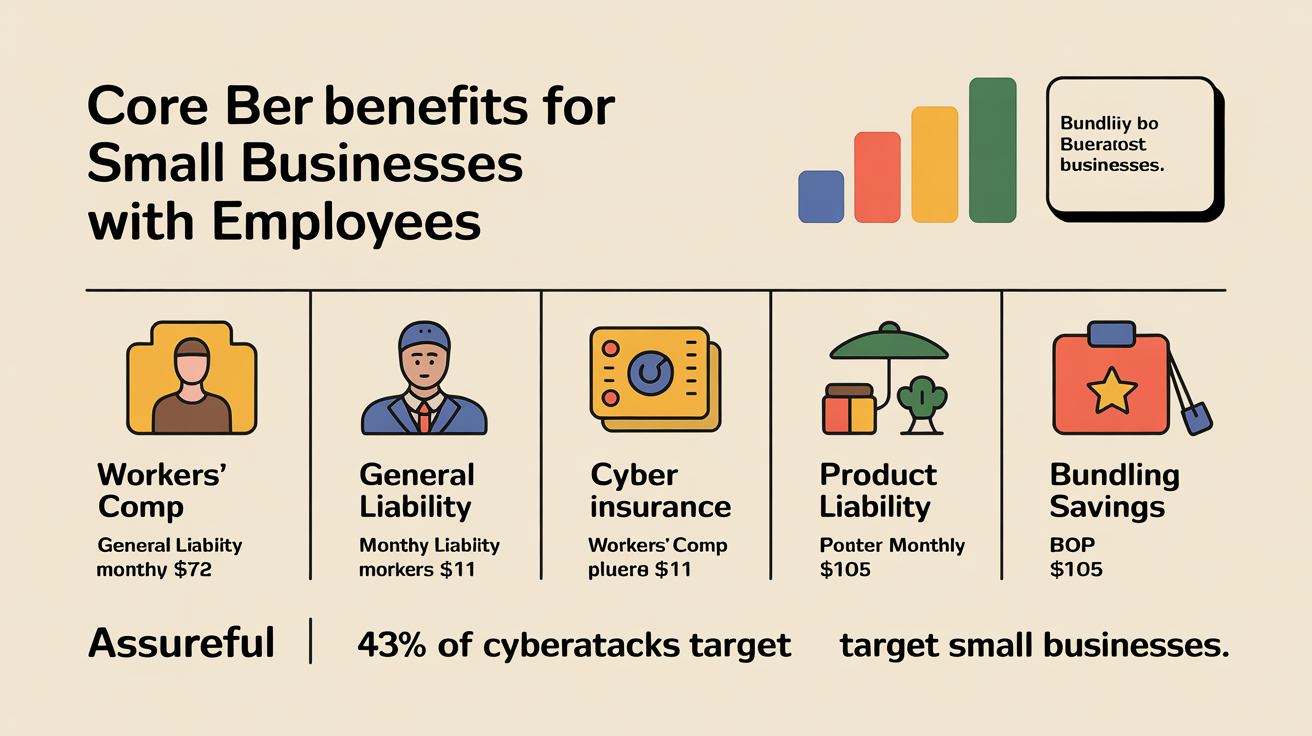
Ignoring these requirements puts your business at risk of costly fines and lawsuits that can halt your growth. A single workplace injury, for example, can lead to thousands in medical bills and lost wages - expenses that workers' compensation insurance covers for as little as $11 per month. General liability coverage for ecommerce businesses averages just $72 monthly but shields you from claims that might otherwise force you to close your doors.
Understanding when and why insurance becomes mandatory helps you keep your business fully compliant and your team protected. You'll see when coverage is non-negotiable, what protections matter most as you scale, and how requirements shift as soon as you start hiring. For a deeper breakdown of when you must buy coverage, see our guide on when insurance becomes essential for ecommerce businesses.
How Employee Insurance Coverage Works: Policy Types, Triggers, and Compliance
Employee insurance for small businesses protects your team and your business through a network of coordinated policies. Each type of coverage responds to specific risks and legal requirements triggered by your headcount, sales, and business activities. Understanding how these policies work together keeps you compliant and shields your business finances from sudden shocks.
Workers' Compensation: Required Coverage for Employee Safety
Workers' compensation insurance is legally required in almost every state as soon as you hire your first employee. This policy covers workplace injuries and occupational illnesses - paying for medical bills, rehabilitation, and lost wages if your team gets hurt on the job. The exact point when you need coverage varies: some states require it for any employee, while others set the threshold at four or more workers for non-construction businesses. Skipping this protection exposes you to heavy fines and lawsuits from injured staff.
Premiums for workers' compensation depend on your payroll size, industry risk, and claims history. For most small businesses, monthly costs average around $86. High-risk sectors, like construction, pay more because workers face greater accident potential. If you run an ecommerce business with warehouse or fulfillment staff, your rates may fall in the mid-range.
General Liability: Broad Protection for Everyday Risks
General liability insurance covers bodily injury, property damage, and advertising injury claims made by customers, vendors, or third parties. Unlike workers' comp, state law rarely mandates general liability, but commercial leases, contracts, and marketplaces often require you to show proof of $1 million or more in coverage. Amazon.com requires commercial liability insurance within 30 days of exceeding USD $10,000 in gross proceeds in any month. From November 2, 2026, enhanced-safety listing categories require at least USD $1 million per occurrence and in aggregate regardless of sales.
General liability policies respond if someone slips in your office, if you accidentally damage a client's property, or if you face slander claims from your ads. You select your coverage limits and deductible when you get a quote. Pricing is based on your industry, employee count, annual revenue, and prior claims. You can see a clear breakdown of what influences your insurance costs in our guide on how much ecommerce business insurance typically runs.
Product and Cyber Liability: Essential for Ecommerce Sellers
For ecommerce businesses, product liability and cyber insurance address risks unique to selling online. Product liability covers claims of injury or damage caused by items you sell - even if you import or private-label them. Cyber insurance protects against data breaches, ransomware attacks, and regulatory costs tied to customer information leaks.
Marketplace contracts and payment processors may require these coverages as you grow. Cyber threats have become a leading cause of loss for digital retailers, with policies now including help with breach response and customer notification costs.
Bundled Policies and Compliance Triggers
Small businesses often bundle general liability, property, and employee coverages into a business owner's policy (BOP) for convenience and savings. Bundling reduces paperwork, lowers premiums, and keeps your compliance status clear. BOPs are customizable to match the protection your workforce and inventory demand as you scale.
- State law triggers workers' comp as soon as you hire staff (thresholds vary by state and industry).
- Marketplace and client contracts may require general liability, product, or cyber coverage once you reach certain sales or revenue levels.
- Your premium costs adjust in response to your payroll, claims history, and risk profile - so scaling up your team will gradually increase monthly payments.
To see how policies are quoted, bound, and activated, follow the step-by-step process covered in our explanation of how instant quotes turn into final coverage.
Key Benefits of Employee Insurance: Real-World Protection for Small Business Teams
The most compelling benefit of employee-focused insurance is simple: it keeps your team safe and your business running. By covering medical costs and lost wages for workplace injuries, you avoid expensive disruptions and show your staff you value their wellbeing. This protection delivers measurable results - lower absenteeism, fewer out-of-pocket expenses for claims, and a stronger reputation for responsible management.
Coverage for Workplace Injuries and Lost Wages
Workers' compensation insurance pays for medical treatment, rehabilitation, and lost wages when employees get hurt or sick because of their job. This coverage is required in most states once you have employees, and it prevents financial strain from both minor and severe accidents.
For example, if a warehouse worker strains their back while lifting inventory, workers' comp would cover their doctor visits and a portion of their income during recovery. Without this coverage, those costs would come directly from your business's cash flow - or worse, from a lawsuit. Learn the triggers, costs, and compliance details in our guide to workers' compensation insurance for ecommerce businesses.
Protection from Lawsuits and Third-Party Claims
General liability insurance shields you from legal costs when third parties claim property damage or bodily injury due to your operations or products. This is critical for retailers - customer injuries from slips, trips, or defective products can quickly escalate into costly lawsuits, even if you did nothing wrong.
For example, if a customer falls in your storage area during a pickup, general liability pays for their medical bills and your legal defense. The policy also covers claims from advertising injury or accidental property damage. Get more details on what scenarios are covered by reviewing how product and general liability affect your online store's bottom line.
Meeting Contractual and Marketplace Requirements
Many ecommerce platforms and business contracts require you to show proof of insurance before you can sell or partner. Having the right coverage keeps you compliant and prevents sudden sales interruptions or penalties. If you sell on Amazon, Shopify, or sign commercial leases, you may be asked for a certificate of insurance as part of onboarding or regular reviews.
- Amazon and Shopify often require minimum policy limits for product liability and general liability coverage.
- Commercial leases may demand evidence of liability insurance as a condition of occupancy.
- Client contracts sometimes stipulate insurance requirements before work begins.
- Having digital proof of coverage speeds up onboarding with new partners.
Failing to meet these requirements can result in lost sales, delisted products, or broken contracts - direct threats to your revenue stream.
Cyber Protection: Defending Against Data Breaches
Cyber insurance has become essential as online sellers face rising threats. Nearly half of all cyberattacks target small businesses, and a single data breach can cost thousands in legal, recovery, and notification fees. Cyber coverage pays for breach response, customer notification, data restoration, and regulatory fines.
For example, if your site is hacked and customer data is stolen, cyber insurance covers the cost of notifying all affected buyers and helps restore your systems, keeping your business afloat during a crisis. This is now a standard expectation for any business handling customer data or payments.
Bundled Coverage Saves Money and Simplifies Protection
Combining coverages through a business owner's policy (BOP) often reduces premiums by 15-25% compared to buying standalone policies. A BOP can include property, general liability, business interruption, and more in a single package. This approach delivers savings and simplifies claims, billing, and compliance reviews.
Bundling not only lowers costs but also ensures protection gaps don't form as your business scales - keeping your team and assets covered as you grow.
Common Misconceptions About Employee Insurance: Myths That Put Your Business at Risk
The most common misconception is that your homeowner's insurance will cover business activities or employee injuries. This is false - home policies specifically exclude claims related to business tools, inventory, and employee accidents. Relying on the wrong coverage exposes you to denied claims, lawsuits, and financial losses.
Myth: Homeowner's Insurance Protects Your Business and Employees
Many business owners believe their standard homeowner's policy automatically protects business equipment or covers employee injuries at home. The assumption is that if it's under your roof, it's insured. This leads to a dangerous gap - especially for home-based sellers running warehouses or offices from their residence.
In reality, homeowner's insurance almost always excludes claims from business activities. Research shows you need a separate policy for professional equipment, inventory, or any injury related to your business. If an employee is hurt while packing orders in your garage, your home policy will not pay medical bills or legal costs. To avoid denied claims, understand exactly what is not covered by standard policies before an incident occurs.
Myth: You Only Need Employee Insurance for On-Site Staff
It's common to think that insurance only applies to employees working in your office, store, or warehouse. Some owners skip coverage for remote workers, part-timers, or gig staff, assuming they fall outside state requirements or insurance definitions.
However, most states require workers' compensation if you have even one employee - regardless of location. Remote staff, warehouse pickers, and delivery drivers are included. If someone gets injured performing business tasks from home or elsewhere, you are still liable for their medical care and lost wages. Skipping coverage for any worker can trigger fines, lawsuits, and forced business shutdowns. See how skipping insurance leads to compliance penalties and financial risks.
Myth: Small Sellers Don't Face Lawsuits Like Big Companies
Small business owners often believe lawsuits only threaten large or high-profile companies. This myth persists because major verdicts make headlines, while smaller claims are settled quietly - or ruin businesses out of public view.
The data shows otherwise. Ecommerce sellers of all sizes are sued for product injuries, cyber breaches, or workplace accidents at similar rates. The U.S. Small Business Administration reports that over a third of small businesses face a legal claim each year. Without the right coverage, a single claim can wipe out your savings or force you to close shop.
Myth: Bundling Coverage Isn't Worth the Effort
Some owners hesitate to bundle policies, thinking it's too complex or won't save much. They may also assume updating insurance as their business grows is optional.
Bundling property, liability, and employee coverage in a business owner's policy (BOP) often cuts costs by 15-25%. It also closes gaps that can form as you add employees or expand operations. Failing to update or bundle coverage leads to out-of-pocket costs, claim denials, and missed discounts. Annual reviews help make sure your policies scale with your risk and revenue.
Protecting Your Team and Business: The Essentials of Employee Insurance for Small Businesses
Employee insurance isn't just a legal requirement - it's a core safeguard for your team and business. The essentials go beyond workers' compensation, reaching into general liability, product liability, and cyber insurance. Each policy manages a different type of risk, all working together to keep you compliant, resilient, and able to respond to setbacks without jeopardizing your future.
The biggest takeaway: treating insurance as a proactive tool, not just a reaction to claims, strengthens your business for growth and stability. Regularly reviewing and updating your coverage helps you adapt to new risks, meet client requirements, and create a safer workplace - directly impacting your ability to attract talent and control costs. Skipping or underestimating any piece increases the odds of lawsuits, lost contracts, and expensive out-of-pocket surprises.
Keep your business protected by reassessing your coverage annually, especially as your team or operations change. For a closer look at cost benchmarks and practical strategies, check how much you should pay for coverage and steps to control your expenses.

Frequently Asked Questions
How does workers' compensation apply to independent contractors and what steps prevent costly misclassification?
Independent contractors are generally not covered by a hiring employer’s workers’ compensation, if a state or the IRS reclassifies a contractor as an employee the hiring firm can be liable for unpaid payroll taxes, back WC premiums, civil fines and benefit costs (and in some jurisdictions criminal penalties). To prevent costly misclassification, use a clear written independent‑contractor agreement that matches actual work practices, apply the IRS common‑law factors and any state “ABC” test (e.g., California AB5) when determining status, and avoid exercising routine control over hours/methods. Require and verify the contractor’s business credentials (EIN, business license), a certificate of insurance showing their own workers’ comp, pay by invoice (not payroll), perform periodic classification audits, and consult employment counsel for borderline cases.
Should my small business buy Employment Practices Liability Insurance (EPLI) to cover claims like wrongful termination, harassment, or discrimination?
Yes, if you have employees or contractors you should strongly consider EPLI, because it specifically covers defense and settlement costs for wrongful termination, harassment, and discrimination claims that commercial general liability and cyber policies typically exclude. It’s especially important once you hire employees (most states require workers’ compensation once you have staff) and for businesses with multiple employees, high turnover, or limited HR resources; compare limits, retentions and exclusions with an insurance broker.
How do employee insurance requirements change if staff work remotely or operate in multiple states?
Employers generally must carry workers’ compensation and any state-mandated coverages (state disability, paid family leave or monopolistic funds) in every state where employees perform work, workers’ comp is usually determined by the worksite where an injury occurs, so remote or multi‑state employees can create multiple state obligations. You must also register for state unemployment insurance and payroll withholding in each state, and federal rules like the ACA still apply once you have 50+ employees. Notify your insurer and update policies because premiums and required coverages vary by state and failing to disclose multistate or remote work can void coverage.
What insurance covers employee theft or fraud (crime/employee dishonesty), and when is it necessary for a small business?
Employee theft/fraud is covered by commercial crime or fidelity (employee dishonesty) policies, often called crime & fraud insurance or fidelity bonds, which reimburse losses from employee theft, embezzlement and (depending on wording) payment or social‑engineering fraud; fidelity bonds specifically reimburse clients and are sometimes contractually required. Small businesses should buy it when they handle cash, inventory, third‑party funds or high transaction volumes, are seeing refund/chargeback or fraud attempts, cannot absorb a potential embezzlement loss, or must meet contract/loan requirements. Always review policy wording and limits carefully (chargebacks and social‑engineering losses are commonly nuanced or excluded) and size limits to at least the fraud loss you couldn’t bear without stress.
How are employee-related insurance premiums calculated and how can I estimate or budget for those recurring costs?
Premiums are calculated by policy type using drivers like payroll, job classification, claims/experience, location, coverage limits and plan design, e.g., workers’ compensation = (payroll ÷ 100) × class rate × experience modifier; health insurance = employer per‑employee‑per‑month (PEPM) contribution × number of enrollees; general liability is usually quoted by industry and revenue. For example, a $500,000 payroll at a $2.50 per $100 class rate yields $12,500 before an experience modifier for workers’ comp; typical employer health contributions (KFF 2023) averaged $7,911/year (~$659/month) for single coverage and $22,463/year (~$1,872/month) for family coverage, while small‑business general liability commonly ranges roughly $500, $5,000/year. To budget, project payroll‑driven costs using the workers’ comp formula, multiply expected PEPM health costs by employee count, add estimated liability/unemployment policy quotes, and include a 10-25% contingency; get state‑specific taxable wage bases and broker quotes for precise numbers.
What coverage do I need for employees who travel for work, including domestic and international trips?
You need workers’ compensation (domestic statutory WC plus foreign voluntary workers’ comp or local statutory cover when abroad) and employer’s liability, commercial general liability, business auto (or hired‑and‑non‑owned auto) and an umbrella/excess policy to raise limits. For international travel add business travel insurance (emergency medical, medical evacuation/air‑ambulance, repatriation, travel accident/AD&D, trip cancellation/interruption and baggage), and specialty cover where required such as kidnap & ransom, political evacuation/crisis response, and political risk. Also confirm local statutory insurance requirements, ensure your primary policies explicitly cover overseas operations, and add cyber/privacy or professional liability extensions as needed; review limits and exclusions with a broker.
How do I verify and document proof of insurance (certificates of insurance) from vendors, subcontractors, or temporary staffing agencies who work with my employees?
Require an ACORD 25 (or insurer-equivalent) certificate showing coverages and limits, effective/expiration dates, policy numbers and insurer NAIC number, plus required endorsements (additional insured and waiver of subrogation) with your company named as certificate holder. Verify by calling the insurer (use the NAIC or insurer portal) or use automated validation/integrations (e.g., Amazon/Shopify connectors or broker systems), log who verified and when, and store the certificate and endorsements in a secure, indexed cloud folder with expiration reminders and an audit trail.

Rohit Nair is the CEO and Founder of Assureful, an insurtech venture creating smart insurance products for ecommerce businesses. With a track record of launching and scaling successful ventures across health, wellness, ecommerce and consumer technology, with multiple exits and acquisitions, Rohit brings deep expertise in financial management, regulatory environments, and high-growth startups.
For more on this topic, see our guide to eCommerce business insurance.
Related: What Is Not Covered By The Commercial General Liability (CGL).
Related: How Much Is Commercial General Liability Insurance? What It Covers.
Sources
- embroker.com
- well-insurance.com
- fitsmallbusiness.com
- thehartford.com
- vouch.us
- shopify.com
- forbes.com
- nerdwallet.com
- seo-pages-web.vercel.nerdwallet.com
- moneygeek.com
- landesblosch.com
- policyape.com
- 1800insurance.com
- moneygeek.com
- hotalinginsurance.com
- thehartford.com
- berxi.com
- geico.com
- biberk.com
- vargasinsurance.com
- pgicentralflorida.com
- insuredbetter.com
- piainsagency.com
- thehartford.com
- thehartford.com
- progressivecommercial.com
- thehartford.com
- macombinjurylawyers.com
- statefarm.com
- progressive.com
- score.org
- geico.com
- deloitte.com
- bfg.law
- usaa.com
- veritasrm.com
- baldwin.com
- kelleyinsure.com
- business.com
- berxi.com
- checklistguro.com
- allstate.com
- news.leavitt.com
- hippo.com
- performanceinsuranceagency.com
- score.org
- progressivecommercial.com
- insureon.com
- simplybusiness.com
- uschamber.com
- insureon.com
- insureon.com
- chubb.com
- progressivecommercial.com
- rmcgp.com
- insureon.com
- esurance.com
- nextinsurance.com
- hulettinsuranceblog.com
- uschamber.com
- hubinternational.com
- uhc.com
- progressivecommercial.com
- getebm.com
- hubinternational.com
- adventuresportsinsurance.cbiz.com
- gocallhub.com