
Amazon.com requires commercial liability insurance within 30 days of exceeding USD $10,000 in gross proceeds in any month. From November 2, 2026, enhanced-safety listing categories require at least USD $1 million per occurrence and in aggregate regardless of sales. The biggest causes of catastrophic loss are underestimating sales (nearly 40% of merchants exceed forecasts) and hidden policy exclusions, using a pay-as-you-sell model that charges based on last month’s actual sales prevents coverage gaps, denied claims, and sudden account suspensions.
- Why Overlooking Product Liability Insurance Costs Sellers More...
- Mistakes That Leave Sellers Exposed: Forecasting, Policy Gaps,...
- Hidden Liability Pitfalls: Imported Goods, Expired Policies, and...
- A Seller’s Habit Checklist: Keeping Your Business Protected...
- The One Mistake That Costs Sellers Most, And How...
Why Overlooking Product Liability Insurance Costs Sellers More Than $100,000 a Year
Just one product liability lawsuit can cost over $150,000 in legal fees, settlements, and lost sales. Every year, online sellers collectively lose hundreds of millions to claims and compliance issues. One major claim or a sudden account suspension for missing insurance wipes out years of profit in weeks.
Skipping or underestimating product liability insurance isn't a small risk. It puts your entire business on the line, account suspensions, lost customer trust, and forfeited future revenue. From November 2, 2026, Amazon.com enhanced-safety listing categories require $1M per occurrence and in aggregate regardless of sales; the existing $10,000 monthly-sales trigger also remains. Fail to meet these mandates and you face immediate removal from major marketplaces, not just Amazon. The fallout? Sales gone. Brand reputation damaged. Recovery is slow, if possible at all.
This guide details the most common mistakes sellers make, why so many overpay or remain underinsured, and how to protect your business. See real-world costs, compliance requirements, and practical steps for stress-free insurance and pay-as-you-sell coverage benchmarks.
Mistakes That Leave Sellers Exposed: Forecasting, Policy Gaps, and Platform Non-Compliance
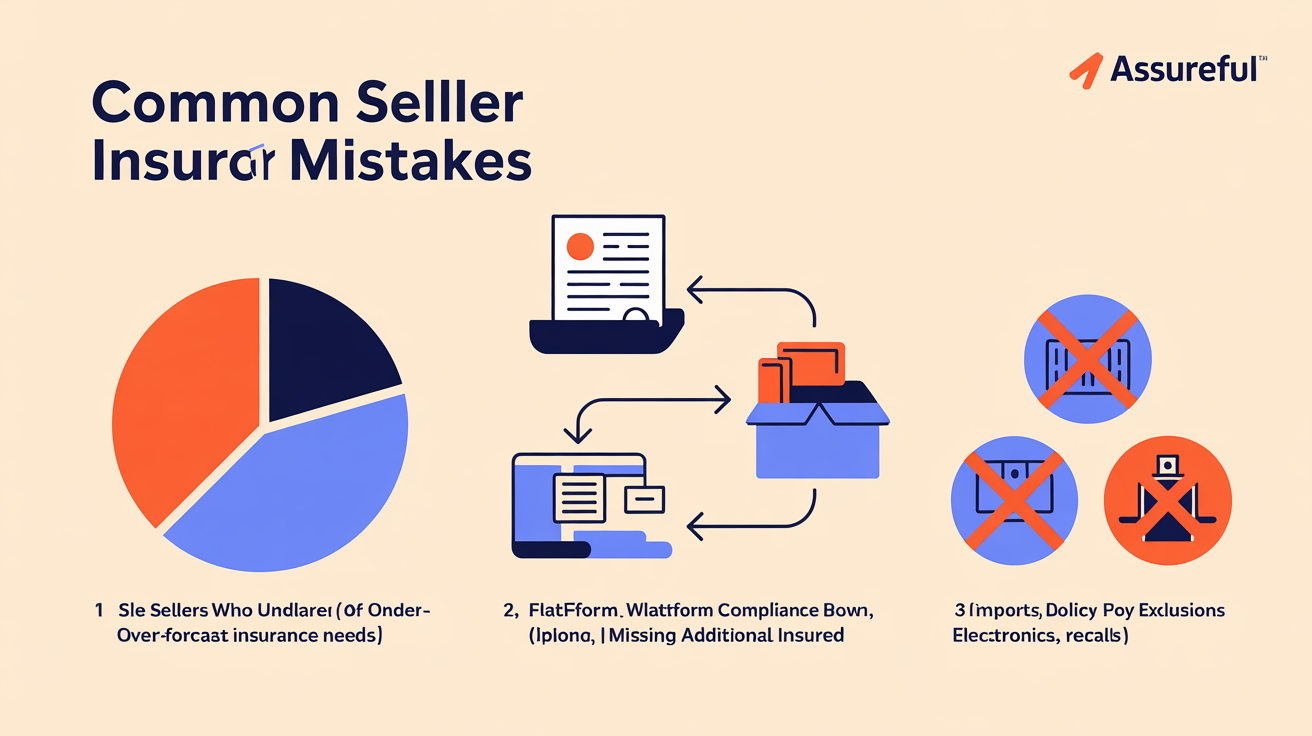
Guessing low on your sales forecast is the costliest mistake sellers make. Nearly 40% of online merchants exceed their original estimate, leading to denied claims and sudden gaps in coverage. One missing claim payment can wipe out years of profit, and put your account in jeopardy.
Underestimating Sales When Buying Insurance
Most insurers demand an upfront estimate of annual sales. To keep premiums low, sellers often guess conservatively. But passing your sales cap can freeze coverage on new orders until you report the increase and pay a hefty adjustment. That delay turns your busiest period into your riskiest, sales go uninsured, claims get rejected, and policies may be canceled. The root problem: traditional policies force you to predict the future, and nobody wants to pay for coverage they won't use.
A pay-as-you-sell model fixes this. Choose a provider that charges based on last month's actual sales. You'll only pay for what you sell, no annual forecast, no guesswork, no hidden holes in coverage. Stress-free insurance that scales with your business, every month. Compare how monthly insurance stacks up to traditional annual policies in our pricing guide to budgeting for your new store.
Overlooking Policy Exclusions
General liability policies rarely cover every product. Exclusions for imports, supplements, electronics, or anything labeled high-risk are common. Some policies only protect US sales, leaving international shipments exposed. Dense policy language hides these carve-outs, so sellers often find out too late, after a claim gets denied or a recall letter arrives.
- Read every policy document for product and territory exclusions.
- Ask your insurer if imported, private label, or ingestible items are included.
- Check for global coverage; you may need an add-on for overseas sales.
- Verify if recall expense coverage is provided or available to add.
Missing Platform Compliance Requirements
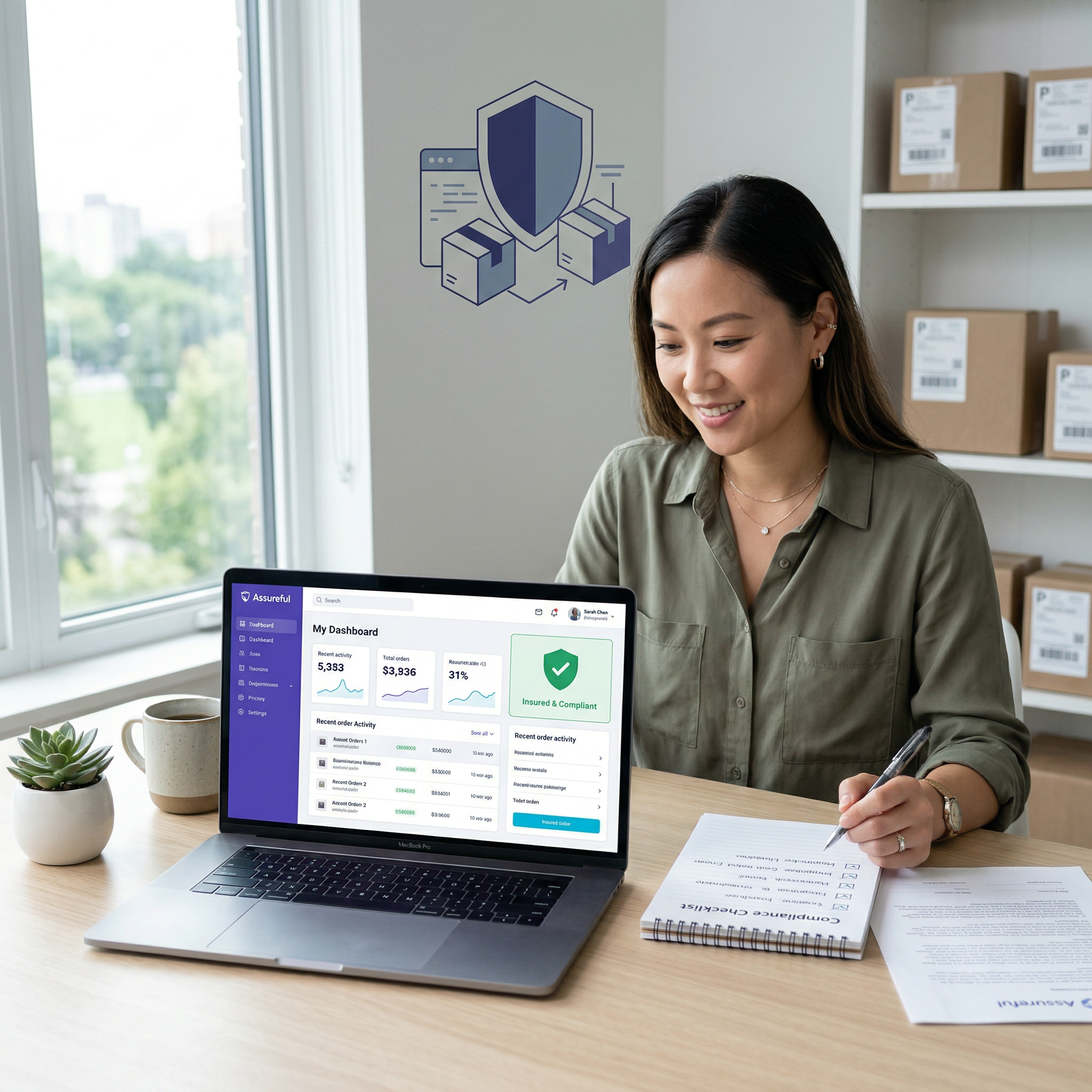
Amazon, Shopify, and other major platforms require sellers to carry at least $1 million in product liability coverage. Amazon also demands that it’s listed as an additional insured. Sellers buy a policy and assume they’re compliant, but miss critical details, policy limits, specific certificate wording, or keeping documents updated. A missing clause or outdated certificate can mean instant account suspension and pulled listings.
Protect your account with a quarterly review of your insurance certificate. Match the platform’s requirements to your policy’s limits, endorsements, and named insureds. For Amazon, the “additional insured” section must use their exact required language. For a breakdown of coverage types and how to structure your policy for business protection, see our guide to coverage decisions that matter.
Hidden Liability Pitfalls: Imported Goods, Expired Policies, and Ignoring Recall Risks
Your name isn't on the factory, but legal responsibility still lands at your door. The most overlooked mistake? Sellers often misjudge liability for imported, private-labeled, or dropshipped products. You might never handle the goods, but U.S. law allows injured customers to sue the seller of record, regardless of where the product originated. Liability runs up the chain and stops with you.
Assuming You’re Not Liable for Imported or Dropshipped Products
Some sellers think importing or dropshipping protects them from product liability. Not so. If you’re the brand or seller of record, courts and major platforms treat you as the manufacturer. An imported charger overheats. A supplement causes illness. The lawsuit lands in your inbox, often because you have a U.S. address or assets. Platform rules and federal safety laws both make this clear.
The solution: get a policy that names your business as the “responsible party” in the supply chain. Imported, private-labeled, white-labeled, coverage needs to fit all of it. Ask your insurer if they exclude overseas-sourced products; plenty of general liability policies do, or require special endorsements. For more exclusion traps, check our plain-language summary of coverage gaps and hidden exclusions.
Letting Policies Lapse or Choosing the Wrong Policy Type
Policy lapses and mismatched policy types leave hidden gaps. Miss a payment, switch insurers, or pick the wrong structure, your business could be exposed for claims tied to past sales. Claims-made policies only cover claims reported while active. If coverage lapses or you move to a different provider without “tail” protection, claims from previous transactions can get denied. Occurrence-based policies are different: they protect you for incidents that happen during the policy period, even if the claim surfaces years later.
- Find out if you have a “claims-made” or “occurrence-based” policy. This shapes your long-term risk.
- Don’t let coverage lapse, set reminders, double-check payment details, and confirm renewal dates are accurate.
- If changing insurers, ask about retroactive dates and whether you need “tail” coverage for old sales.
- Check your certificate and endorsement wording for any gaps tied to policy changes.
Ignoring Recall and Defense Costs
Recall costs rarely make it into risk budgets. Standard general liability policies typically exclude the steep price of recalls, replacements, disposal, and public alerts. For cross-border sellers, recall costs can soar, recent EU figures put the average above $4.2 million. Another trap: not knowing if defense costs count against your policy’s limit. If legal fees eat into your $1 million aggregate, less remains to pay damages or settlements.
Ask about recall expense riders and confirm how defense costs are handled. If you sell electronics, toys, or ingestibles, recall risk isn’t theoretical, consider dedicated recall coverage. For a clear breakdown of product liability vs. general liability, see our plain-English guide with coverage examples: product liability and general liability differences.
A Seller’s Habit Checklist: Keeping Your Business Protected From Product Liability Mistakes
Prevention starts with habits, not hope. Structured checklists, routine audits, and clear documentation shield your business from risk you can control. Build these habits into your workflow to catch errors, stay compliant, and act before small gaps turn into claims.
- Review your insurance coverage and policy documents every quarter. Check that sales volumes, product types, and listing details match what’s on file with your insurer, not just at renewal.
- Run a compliance checklist before launching new products or entering new markets. Confirm that policy limits, covered items, and endorsements reflect your current business. Use a stepwise resource like the ultimate ecommerce insurance checklist as your baseline.
- Keep supplier quality control records and product test documentation organized. Share updates with your insurer during scheduled reviews.
- Notify your insurer right away if you add a sales channel, change your product lineup, or see a major sales spike. Don’t rely on memory, or wait for annual renewal.
- Request written confirmation from your insurer on recall costs and defense costs. Never assume these are included. Written proof prevents confusion if you need to file a claim.
These routines create a feedback loop. Each review closes gaps, strengthens compliance, and keeps your coverage aligned with real business risk. Over time, these habits become automatic. You gain confidence to expand, diversify, or shift quickly as markets change, without exposing your business to preventable losses. For step-by-step guidance from instant quote to purchase, or to systematize your insurance workflow, see our practical guide on ecommerce insurance process best practices.
The One Mistake That Costs Sellers Most, And How Proactive Habits Prevent It
Missing regular reviews of your product liability insurance costs sellers more than any other oversight. Ignore this, and your business risks denied claims, missed payouts, or sudden account suspensions when marketplaces check compliance. Even a single unchecked change, a new product, a new sales channel, can expose a gap that leads to major losses.
Build review habits into your process. Set reminders to check your coverage, confirm compliance, and update your insurer or suppliers when things shift. These quick, consistent actions keep your policy in sync with your business as it grows and changes.
Routine insurance check-ins aren’t just about risk, they give you freedom to grow. Want to see the impact? Read how another store cut liability costs by restructuring coverage in under 60 days: how my store cut liability costs 40% in 60 days.
Frequently Asked Questions
How quickly can I get my product liability coverage increased if a product goes viral or sales spike seasonally?
Usually you can get a modest limit increase or short-term endorsement within 24-72 hours through your broker or an ecommerce-focused program, but meaningful permanent limit increases or new umbrella layers typically require underwriting and take about 1-4 weeks (longer for high-exposure accounts). Carriers will want updated revenue/sales data and product safety/QA info, and expect prorated premium adjustments and possible audits; commercial umbrella coverage runs roughly $40/month per $1M of extra limit, so notify your broker immediately to fast-track the change.
If I use dropshippers or third-party suppliers, does their product liability policy protect my marketplace account or do I need my own coverage?
No. A dropshipper’s or supplier’s product liability policy generally protects the supplier/manufacturer, not your marketplace account or indemnification obligations, you can still be named in suits and marketplaces often require seller-held coverage. Review platform contracts (Amazon/Walmart frequently require sellers to carry and document high-limit liability and name the platform as additional insured, some Vendor Central/marketplace agreements cite $10M minimums) and obtain your own product liability policy (plus recall or international extensions if needed).
Does product liability insurance cover the costs of a product recall, customer refunds, or removing dangerous inventory from sale?
No, a standard product liability policy typically pays third‑party claims for bodily injury and property damage caused by a defective product but does not cover product recall costs, customer refunds, or the expense of removing unsafe inventory. Those recall-related costs require a separate product‑recall/contamination insurance policy or a specific recall endorsement, and recall coverage is sold separately with its own sublimits, waiting periods, and exclusions. Always check policy language and buy appropriate limits/sublimits if you want recall, notification, disposal, replacement, or business‑interruption protection.
Can a personal or business umbrella policy satisfy marketplace insurance requirements, or do I need a standalone product liability policy?
No, an umbrella policy alone typically will not satisfy marketplace insurance requirements. Marketplaces usually require a primary commercial general liability policy that includes products/completed operations or a standalone product liability policy (commonly $1M per occurrence), while an umbrella only provides excess limits above those primary policies and cannot substitute for required primary product liability coverage; check the specific marketplace wording for exact limits and named‑insured/endorsement requirements.
What exact documentation do Amazon, Walmart and other marketplaces accept as proof of insurance (COI, additional insured endorsement), and how should those documents be formatted and submitted?
Use an ACORD 25 Certificate of Liability Insurance showing insurer, policy number, effective/expiration dates, coverage types and limits (most marketplaces require at least $1M per occurrence), the named insured, and the marketplace listed as Certificate Holder, plus the actual Additional Insured endorsement (ISO CG‑20‑10/CG‑20‑37 or insurer‑equivalent) or a policy endorsement explicitly naming the marketplace (e.g., “Amazon.com Services LLC and its affiliates” or “Walmart Inc. and its affiliates”). The endorsement should show Commercial General Liability (including Products & Completed Operations) and include Primary & Non‑Contributory and Waiver of Subrogation language if requested; both COI and endorsement must be legible, show insurer contact and policy numbers, and be current. Upload them via the marketplace’s seller/partner insurance upload page (Amazon Seller Central insurance upload; Walmart Seller Center insurance portal) or to the marketplace’s designated insurance inbox per their instructions, preferably as PDFs (JPG/PNG often accepted) and ensure the legal entity on the documents matches your seller account.
Are free samples sent to influencers, reviewers, or trade shows covered by my product liability policy, or do I need a separate endorsement?
Usually yes, free samples given to influencers, reviewers, or at trade shows are generally covered by the products-completed operations (product liability) section of a Commercial General Liability (CGL) policy, but coverage depends on your specific policy language, limits, and exclusions. Review your Declarations, Definitions, and any sample/promotional exclusions and get written confirmation from your insurer or broker; you may need an endorsement or a separate product-recall policy if the carrier limits promotional distributions or if recall risk exists.
How will making a product liability claim affect my future premiums and ability to get coverage, and what steps can reduce long-term rate increases after a claim?
A product-liability claim commonly increases premiums, often by ~20% or more, and can make coverage harder or pricier for several years, with multiple small claims sometimes hurting more than a single large one; insurers typically reward a 3-5 year claims-free record with preferred pricing. To limit long-term increases, implement documented safety/quality-control and training programs (carriers may offer 5-10% credits), keep thorough incident records and physical evidence, consider paying small losses out-of-pocket, raise your deductible (e.g., $500→$1,000 often saves ~10-15%; $2,500 can save ~20%+), and bundle policies (commonly saves 10-15%).

Rohit Nair is the CEO and Founder of Assureful, an insurtech venture creating smart insurance products for ecommerce businesses. With a track record of launching and scaling successful ventures across health, wellness, ecommerce and consumer technology, with multiple exits and acquisitions, Rohit brings deep expertise in financial management, regulatory environments, and high-growth startups.
Related: What Is Not Covered By The Commercial General Liability (CGL).
Related: How Much Is Commercial General Liability Insurance? What It Covers.
Sources
- ecom.insure
- payoneer.com
- forbes.com
- vouch.us
- assureful.com
- hotalinginsurance.com
- noblepagroup.com
- dealhub.io
- biberk.com
- iii.org
- blog.hubspot.com
- allenmatkins.com
- redrockinsure.com
- saylordotorg.github.io
- content.naic.org
- business.com
- nationwide.com
- baldwin.com
- score.org
- hubspot.com
- docs.saltproject.io
- uschamber.com
- anthem.com
- thehartford.com
- deloitte.com
- totalcsr.com
- veritasrm.com
- security.org
- policyape.com
- getebm.com
- cphins.com
- hubinternational.com
- eslaw.com
- chastain-assoc.com
- regulaforensics.com