
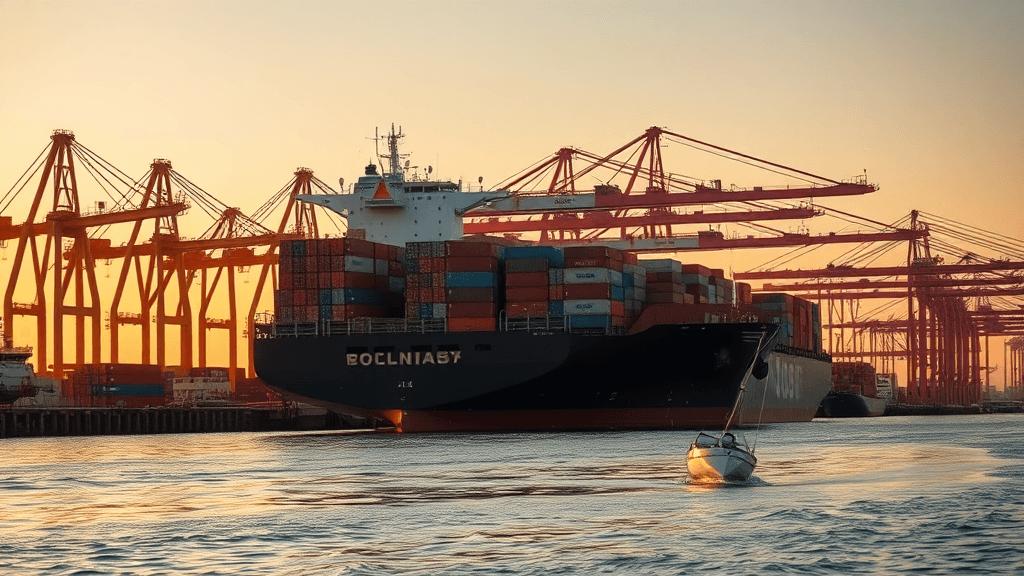
China supplied roughly 16% of all US goods imports in 2024 (about $438 billion, down from a $562.9 billion peak in 2022). For eCommerce sellers, the question is rarely whether to source from China; it is how to manage the tariffs, compliance, and product liability exposure that come with the territory. This guide covers the real cost math, the CPSC-compliance trap, and where most importer insurance policies leave a hole.
Key takeaways
- $438 billion in goods imported from China in 2024 (US Census Bureau), still the largest single-country source for US imports.
- Section 301 tariffs add 7.5%-25% to most imported goods, with steeper rates on EVs, batteries, semiconductors, and steel as of 2024-2025.
- CPSC-compliance is the single biggest source of import claims against eCommerce sellers, and "compliant in China" almost never means compliant in the US.
- Most generic CGL policies exclude or sub-limit imported Chinese goods, leaving small sellers exposed to product liability claims they thought were covered.
- Marketplaces hold sellers fully liable for the products they list, regardless of where the goods were manufactured.
The state of US imports from China
The US imported approximately $438 billion in goods from China in 2024, according to US Census Bureau trade data. That is a 22% drop from the 2022 peak of $562.9 billion, driven largely by tariff escalation, supply-chain diversification toward Vietnam and Mexico, and the continued unwinding of pandemic-era logistics distortions.
Despite the drop, China remains the largest single-country source for US imports, accounting for roughly 16% of the total. For eCommerce sellers, the categories most concentrated in Chinese sourcing include consumer electronics, apparel, kitchen and home goods, toys, and small appliances.
Advantages of sourcing from China
Lower unit cost
Manufacturing labour and tooling costs in China are typically 40-70% lower than equivalent US production, even after accounting for shipping. For private-label and branded eCommerce products, this is the primary commercial reason to source there. Margin gains can be retained, reinvested into Amazon FBA profit calculations, or partially passed through to keep listings competitive on price.
Production scale
Chinese factories specialise in volume. A small US contract manufacturer might consider 5,000 units a respectable production run; mid-tier Chinese factories run that volume in a single shift. For sellers scaling from $10K to $1M in monthly revenue, the gap between domestic and Chinese capacity becomes a real constraint.
Supplier density and product variety
Industrial clusters in regions like Shenzhen (electronics), Yiwu (small consumer goods), and Foshan (furniture) concentrate dozens of suppliers offering near-identical capabilities, which keeps quote turnaround fast and prices competitive. Whether you sell on Amazon, Etsy, eBay, or Shopify, the breadth of available SKUs is unmatched.
Customisation and white-labelling
Most Chinese manufacturers will modify packaging, materials, dimensions, or branding for relatively low MOQs (minimum order quantities). For private-label sellers, this is what makes a differentiated product economically viable.
The real cost: tariffs, compliance, and exposure
Section 301 tariffs
The US has applied Section 301 tariffs to imports from China since 2018. The four lists cover roughly $370 billion in annual import value:
- List 1: 25% (mostly industrial inputs)
- List 2: 25% (chemicals, semiconductors, machinery)
- List 3: 25% (a wide range of consumer goods, including many eCommerce SKUs)
- List 4A: 7.5% (consumer electronics, apparel)
The 2024-2025 escalation added higher rates on EVs (100%), lithium-ion batteries (25-50%), semiconductors (50%), and steel/aluminium (25%). Importers (not Chinese exporters) pay these tariffs at customs entry. They flow through to landed cost, not just unit cost.
CPSC compliance gap
The Consumer Product Safety Commission regulates the safety of consumer products sold in the US. "Compliant under Chinese law" is rarely the same as "compliant under US law". Common gaps:
- Children's products without third-party CPSC testing certificates
- Lithium-ion battery products without UN 38.3 testing
- Sleepwear without flammability testing per 16 CFR Parts 1615/1616
- Lead and phthalate content above CPSIA limits in toys, jewellery, accessories
- Missing tracking labels (manufacturer, batch, country of origin) required for recall traceability
Marketplaces increasingly require sellers to provide compliance documentation upfront. Amazon, for instance, has restricted thousands of categories behind documentation gates over the past three years.
Logistics and lead times
Ocean freight from China to a US east-coast port currently runs 30-45 days door-to-door, with rates fluctuating between $1,800 and $4,500 per 40-foot container depending on demand. Air freight cuts that to 5-10 days at 4-6x the cost. An experienced freight forwarder can save 10-20% on landed cost simply by routing intelligently.
The insurance gap most sellers do not see until they need it
This is the part of the China-import equation most sellers underestimate. A typical generic Commercial General Liability (CGL) policy will either:
- Exclude products manufactured outside the US entirely. Some traditional carriers ring-fence "foreign-manufactured products" out of products coverage. The exclusion is buried in the policy schedule, not the marketing materials.
- Sub-limit imported goods to $100,000-$250,000. If a CPSC complaint or product injury claim exceeds the sub-limit, the seller pays the difference out of pocket.
- Increase the premium 30-80% if the seller declares Chinese sourcing upfront, treating the entire SKU as elevated-risk regardless of category.
The product liability exposure on imported goods is real. Garcia v. Ledraplastic established that foreign manufacturers selling into US marketplaces are subject to US product liability law, and the seller of record (typically the eCommerce business) is the practical defendant when the original manufacturer cannot be reached or served.
Specialist Amazon seller insurance like Assureful covers imported goods at the standard limit ($1M/$1M) without sub-limits, with carriers that understand the SKU profile of cross-border eCommerce. Pricing starts at $26 per month and is, on average, 42% less than comparable A-rated insurers carrying foreign-products sub-limits.
Pre-import compliance checklist
Before placing your first PO with a Chinese supplier, work through this list. Skipping any item is where most first-time importers run into trouble.
- Confirm the HTSUS classification and Section 301 tariff rate for your product
- Get a Customs Bond (single-entry or continuous, depending on import volume)
- Obtain CPSC General Conformity Certificate or Children's Product Certificate as required
- Confirm UL/ETL certification for any electrical or battery-powered products
- Verify FDA registration if you are importing cosmetics, medical devices, or consumables
- Confirm tracking-label compliance (manufacturer, batch, origin) on packaging
- Lock in freight forwarder + customs broker before goods leave the factory
- Get a product liability insurance quote that explicitly covers imported Chinese goods at $1M/$1M with no sub-limit
Frequently asked questions
What is the average tariff on goods imported from China to the US?
Section 301 tariffs add 7.5% to 25% on top of standard MFN tariffs for most consumer goods, with steeper rates (50-100%) on EVs, batteries, semiconductors, and steel as of the 2024-2025 escalation. The exact rate depends on your product's HTSUS classification.
Do I need a customs broker to import from China?
Technically no for shipments under $2,500, but practically yes for any commercial volume. A customs broker handles entry filings, classification, duty payment, and any CBP exam responses. Forwarder-bundled brokerage typically costs $80-$150 per entry.
What is the biggest compliance risk for sellers importing from China?
CPSC non-compliance on consumer products. Lead content in jewellery, lithium-ion battery testing, children's product certification, and flammability testing on textiles are the four most common failure points. A failed CPSC inspection can result in product seizure, mandatory recall, and class-action exposure.
Does product liability insurance cover imported Chinese goods?
Most generic CGL policies either exclude or sub-limit imported goods. Specialist eCommerce policies (Assureful and a handful of others) cover them at full $1M/$1M limits without sub-limits. Always read the products endorsement and any "foreign products" exclusion language before binding a policy.
How long does it take to import goods from China?
30-45 days door-to-door by ocean freight, 5-10 days by air freight. Add 2-4 weeks for production lead time at the factory and 1-3 days for customs clearance. Total from PO to delivery is typically 8-12 weeks for sea-freighted goods.
Bottom line
Importing from China is still the highest-leverage sourcing decision most eCommerce sellers make. The unit-cost savings are real, but they are not the full picture. Section 301 tariffs add 7.5-25% to landed cost, CPSC compliance requires real testing and certification spend, and most generic insurance policies leave a hole on imported goods that only shows up when a claim hits.
Plan for tariffs, build a compliance file before the first container ships, and confirm your insurance covers imported goods at full limits. The full eCommerce insurance buyer's guide walks through which policy types respond to which import-related claims, and a specialist Amazon seller insurance quote takes about two minutes if you want pricing on $1M/$1M coverage that includes Chinese goods.
Related reading: Amazon A+ Content, Amazon FBA sell-through rate, Amazon seller insurance guide.