

Online retailers face frequent, costly product and general liability claims, from allergic reactions to dyes to copyright suits over ads, with legal costs and payouts often topping $50,000 and sometimes forcing small stores to close. Key takeaway: secure appropriate product and general liability insurance, maintain marketplace-required proof (e.g., Amazon, Shopify), and follow risk-control steps now or legal fees, frozen funds, or delisted listings can erase years of profit.
Pay-as-you-sell general liability insurance designed specifically for eCommerce. Premiums starting from just $26 per mon...
Premiums from $26/month
Learn MoreWhy Liability Risks Hit Online Stores Harder Than You Think
You ship your best-selling product, expecting another satisfied customer.
A week later, an email arrives: a child had an allergic reaction to a dye in your clothing, and the parent wants medical costs covered.
Almost at the same time, a lawyer accuses you of using a copyrighted photo in your latest ad campaign.
Both situations threaten your profits.
Without proper protection, the costs come straight from your business account.
Even experienced sellers get caught off-guard.
Lawsuits aren’t rare exceptions in ecommerce; they’re a real, sometimes devastating, cost that can erase years of hard work overnight [1][9].
You’ll see how product and general liability exposures directly hit your online store’s profits and which steps stop legal, financial, and reputational fallout.
Practical, not theoretical.
When you run an ecommerce shop, every product and every piece of content can expose you to risk.
Product liability matters whether you make, import, or simply ship an item, if it causes harm, you could be on the hook.
General liability covers a broader range: injuries tied to your business and copyright claims linked to your marketing [6][16].
Many sellers assume only high-risk products attract lawsuits.
But everyday items like bath salts or pet gear have triggered claims [21].
Ignore them at your peril.
We break down product liability versus general liability and show how each affects online retailers.
You'll read real legal-cost examples.
Plus practical insight on what coverage handles common threats.
Resources include What Is Product Liability Insurance For? 7 Costly Mistakes Sellers Make.
Read Product Liability Versus General Liability: Which One Actually Protects Your Ecommerce Store?.
Also see What Is Public And Products Liability Insurance? How To Tell If Your Store Needs It.
For a deeper look at the financial impact, see The Complete Buyer's Guide To Ecommerce Business Insurance: How To Choose Coverage That Protects Your Store And Profits.
Or check our recommended solution.
If you're questioning the value, the numbers in Is Public Liability Insurance Worth It? Real Results From A 30-Day Claim Simulation may surprise you.
Why How Product And General Liability Affect Your Online Store’s Bottom Line Matters
Ecommerce keeps growing fast. Each new product you add increases the chance of a claim, often in ways you don't expect. Industry data shows legal actions against online retailers are on the rise as marketplaces like Amazon and Shopify increase compliance demands and automate the claims process [1][6]. Not hypothetical anymore, it's real. Major platforms now require proof of insurance before releasing funds or keeping your listings live. Miss that, and you can be sidelined for weeks.
Legal costs have climbed sharply. Product liability payouts for ecommerce sellers often top $50,000, and even minor cases, like allergic reactions or malfunctions, can force small stores to close [9][21]. General liability claims reach beyond physical harm. A single advertising error or shipment mistake can trigger five-figure settlements. Online businesses face higher per-item liability risk than brick-and-mortar stores because transactions often cross state or national borders and customer expectations for safety are rising.
Your margins can disappear fast. Many store owners underestimate exposure or buy insurance limits that don't match actual risk. Not sure what's typical? Check real numbers in How Much Is $1,000,000 Liability Insurance A Month? Typical Rates And Cheap Alternatives, or see why low coverage can be risky at How Much Is $100,000 Liability Insurance? 6 Mistakes That Make Low Limits Dangerous. Settlements over $20 million have happened in categories like food, supplements, and electronics, as shown in How Much Is $20 Million Public Liability Insurance? A Checklist To Decide If You Need High Limits.
Premiums can eat into profits fast. That often happens when coverage doesn't match sales or when renewals rely on outdated forecasts. See the pricing benchmarks. Visit How Much Is Ecommerce Business Insurance? A Pricing Guide To Budgeting For Your New Store for up-to-date pricing benchmarks and budget planning. Read How To Lower Your Liability Premiums Without Sacrificing Coverage for ways to cut costs without leaving gaps. If delivery vehicles are part of your operation, additional risks come into play, see Protecting The Vehicles That Move Your Products: Commercial Auto Options For Sellers.
Coverage Decisions That Make or Break Your Insurance Budget
Your insurance costs depend on three choices: how much coverage to buy, the deductible you select, and whether you bundle policies. Picking the right mix here can keep you fully compliant without locking up cash or overpaying for low-value extras. Each decision changes your premiums and exposure in different ways.
How Much Coverage Is Enough?
The coverage limit you choose sets your maximum protection against claims. Most eCommerce sellers start with $1 million per occurrence, but product categories with higher risk, like electronics, supplements, or children’s goods, often require $2-5 million limits to satisfy marketplace rules or to match real-world claim trends. Lower limits reduce premiums, but a single large claim can wipe out your protection and threaten business cash flow. If you’re unsure how much to carry, see the detailed benchmarks in how product liability affects your bottom line.
Keep in mind: Some large settlements reach well into seven or eight figures, especially for injuries or safety recalls. Review your product mix and typical claim sizes in your category before settling on a limit.
Deductible Choices: Cash Flow vs. Risk
Your deductible is the amount you pay first if there’s a claim. Higher deductibles lower your monthly premium but mean paying more out of pocket if something goes wrong. Lower deductibles provide more predictable costs and faster claim payouts, but increase your premium. The best choice comes down to your risk appetite and available reserves. For practical tactics to keep costs low without sacrificing coverage, review ways to reduce your liability premiums.
Bundling Policies: Should You Combine Coverage?
Bundling liability with property, auto, or workers’ compensation coverage often cuts total costs by 15-25% compared to buying each policy separately. It also simplifies renewals and compliance tasks. However, you might end up paying for features you don’t need if you don’t review each policy carefully. Only bundle if you actually need every coverage offered; otherwise, you can waste budget on low-value add-ons.
- Bundling works best for stores with inventory, vehicles, or staff to protect.
- Standalone general liability saves money for sellers with simple eCommerce operations.
- Ask about bundle discounts before renewing or switching insurers.
Location and Product Category Impact
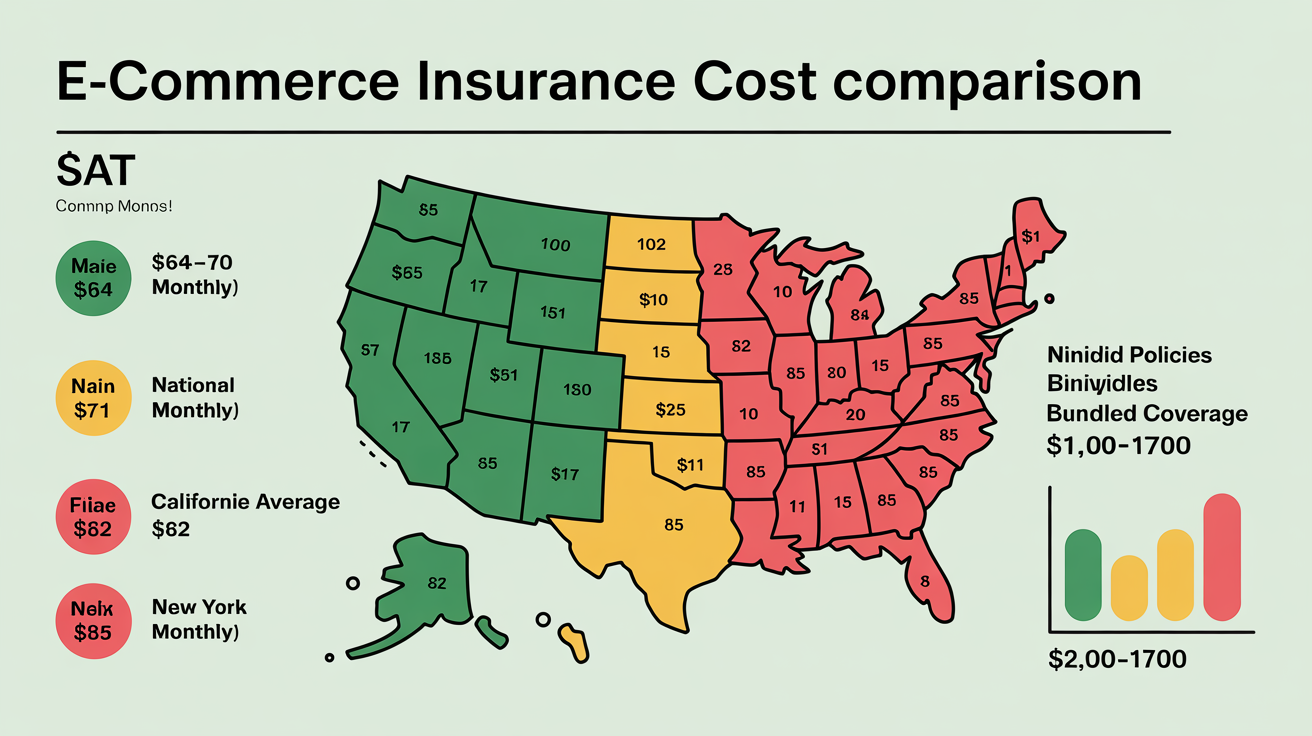
Where you operate and what you sell can swing monthly premiums by 30% or more. For example, Maine businesses pay about $64 monthly for standard coverage, while the same policy in New York averages $85. Electronics and baby products see higher rates than apparel or décor, because claims and settlements are statistically more frequent and severe. For state-by-state cost comparisons and tips to control expenses, reference pricing benchmarks and cost reduction strategies.
Costly Mistakes That Drain Your Profits
The most damaging mistake is underestimating your liability if a product fails, regardless of whether you ship directly or use dropshippers. If a customer gets hurt or property is damaged, you’re on the hook for legal costs and settlements, not your supplier. Even a low-volume claim can strip out months of profit, especially if your policy limit is too low or your coverage has major gaps.
- Assuming you’re not liable for defects from overseas suppliers exposes you to surprise lawsuits and direct financial loss; see how product liability affects your bottom line.
- Choosing the lowest coverage limit can leave you exposed to claims that exceed your policy, forcing you to pay the difference out of pocket; review common policy red flags that increase risk.
- Paying month-to-month instead of annually includes 4-10% in extra payment processing fees, money lost directly from your margins.
- Ignoring cyber risk leaves your store vulnerable to breaches; major retailers have faced over $5 million in costs when a cyber attack exceeded their insurance limits.
- Skipping policy reviews lets exclusions and outdated coverage quietly build up, meaning you might only gaps during a costly claim event.
Protect your business by reviewing your coverage for these pitfalls. Use a step-by-step mistake checklist for eCommerce insurance and a policy review guide to spot and fix costly coverage gaps before you’re hit with an unexpected claim.
Start With Your Biggest Financial Risk
Your highest financial risk almost always comes from product liability, especially if you sell physical or imported goods. Before anything else, review how product liability affects your bottom line and make sure your coverage is strong enough for what you sell. This is the single most important step for any eCommerce business with physical products.
If your priority is minimizing overall cost, start by reviewing your insurance budget against benchmarks. Use the cost breakdown for general liability ($850 median), product liability ($500 median), and cyber coverage ($500 median) so you can set realistic expectations. If you’re comparing insurance platforms or want to know how to find the best deal, follow the step-by-step guide to comparing online insurance options to avoid common traps and overpaying for the same coverage.
Assureful offers stress-free insurance that matches your actual monthly sales, instead of locking you into upfront annual forecasts. For a deeper understanding of how much insurance you need, and when to buy each policy, see the full checklist that determines immediate insurance needs and make informed decisions to protect your margins.

Pay-as-you-sell general liability insurance designed specifically for eCommerce. Premiums starting from just $26 per mon...
Premiums from $26/month
Learn MoreFrequently Asked Questions

Rohit Nair is the CEO and Founder of Assureful, an insurtech venture creating smart insurance products for ecommerce businesses. With a track record of launching and scaling successful ventures across health, wellness, ecommerce and consumer technology, with multiple exits and acquisitions, Rohit brings deep expertise in financial management, regulatory environments, and high-growth startups.
For more on this topic, see our guide to eCommerce business insurance.
Related: What Is Not Covered By The Commercial General Liability (CGL).
Related: How Much Is Commercial General Liability Insurance? What It Covers.
Sources
- dealhub.io
- allstate.com
- anthem.com
- blog.hubspot.com
- insure.com
- bankrate.com
- cnbc.com
- assureful.com
- uschamber.com
- cnbc.com
- nerdwallet.com
- go4.io
- 1800insurance.com
- insureon.com
- nextinsurance.com
- insurancecanopy.com
- insureon.com
- progressivecommercial.com
- techinsurance.com
- insuredbetter.com
- rginjurylaw.com
- nerdwallet.com
- biberk.com
- checklistguro.com
- esportsinsurance.com
- forbes.com